Vina Robles - Cabernet Sauvignon Paso Robles 2023 (750ml)
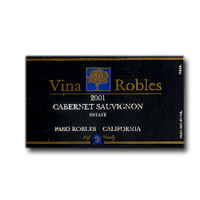


| Producer | Vina Robles |
| Country | United States |
| Region | California |
| Subregion | Paso Robles |
| Varietal | Cabernet Sauvignon |
| Vintage | 2023 |
| Sku | 21284 |
| Size | 750ml |
 |
Rated 91 Points by Wine Enthusiast
Aromas of roasted black cherry, fig, caramel and milk chocolate make for a rich and gooey entry to the nose of this appellation blend. Lavish, creamy and smooth tannins frame the sip, where roasted plum, fig and raisin flavors are framed by a more rigid structure toward the finish.
Vina Robles Cabernet Sauvignon Paso Robles 2018
Tasting Notes
Color: Dark Garnet
Aroma: Cassis, dark cherries, licorice and mocha, with hints of juniper berries and violets
Taste: Full-bodied with dark fruits, mocha notes, and richly textured tannins
Aging: 20 months in French, Hungarian, and American oak barrels
Winemaker Notes
Dark garnet color. Aroma of cassis, dark cherries, licorice and mocha, with hints of juniper berries and violets. Full-bodied with dark fruits, mocha notes, and richly textured tannins.
Blend: 85% Cabernet Sauvignon, 15% Petit Verdot
The fruit for our 2018 Cabernet Sauvignon was selected from two of our estate vineyards in Paso Robles – Huerhuero and Creston Valley. Huerhuero Vineyard, in the hilly terrain between the El Pomar and Geneseo Districts, benefits from the moderating Pacific breezes that blow through the Templeton Gap in the afternoon as well as its limiting calcareous subsoils. Creston Valley Vineyard has picture perfect high terrain, southern exposure and shallow soils with noticeable granulated limestone. Both of these vineyards produce Cabernet Sauvignon with an overall balance of expressive flavors and structure. All the blocks were handpicked and sorted in the early morning to ensure quality and uniformity of ripeness. The fruit was further sorted at our state of the art winery, gently destemmed, optically berry sorted and crushed into temperature-controlled stainless steel tanks. Pumpovers took place regularly to enhance color and help extract tannins from the skin. After pressing, the wine was racked into barrels to complete malolactic fermentation. While the majority of wine was aged in French oak, we also used some American and Hungarian oak barrels for added nuances and complexity. After 8 months of aging and extensive blending trials, a bit of Petit Verdot was added to enhance structure. The final blend was then aged in barrels for an additional 12 months to fully integrate before bottling.
Winemaking
While adhering to traditional winemaking methods, veteran winemaker Kevin Willenborg implements modern technologies to make his estate wines with minimal intervention.
Kevin is known for his great attention to detail and for working with the vines so that they express the true potential of the grape. Together with our vineyard team, he employs sustainable techniques to achieve the highest quality possible. Kevin explains: "Each wine has its own life. That life begins with the planting and development of the vines. It is then transferred from the earth through the vine as the grapes are harvested, crushed, fermented into wine and eventually bottled. The role of the winemaker is to respectfully steward this life with care and attention to detail."
Kevin's goal is to grow wines that completely translate the Paso Robles terroir into the bottle and let the true fruit qualities shine through in the wine. For this reason, he uses both subtle and discrete traditional as well as modern winemaking methods, in order to enhance the full expression of the grape. Furthermore, barrels are carefully selected from cooperages that are known for subtlety, and only low and medium toast levels are employed.
Paso Robles Region
Paso Robles is located approximately halfway between Los Angeles and San Francisco in northern San Luis Obispo County on California’s Central Coast.
Here, the growing season is distinguished by a reciprocating climate of warm inland afternoons and cool marine-moderated evenings. To the west, the Santa Lucia Mountains border the coast and insulate the Paso Robles region, trapping heat during the daytime. Toward evening, however, coastal air billows inland through the Templeton Gap, a notch in the mountains, as well southward from the Salinas Valley. Temperature swings of 50 degrees are not unusual during the summer months. Such conditions are optimal for Bordeaux and Rhône varieties, with ample solar energy to develop fully defined flavors and sufficient natural cooling to maintain excellent acid structure and overall balance.
In addition to Paso Robles’ exceptional winegrowing conditions, we were drawn to the community and culture of the region. Paso Robles is a friendly place with a pioneering spirit and an optimistic energy, particularly within the local wine industry.

Follow Us